
My Child is a Picky Eater, Help!

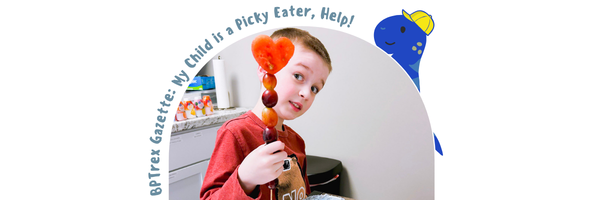
Picky eating is pretty common for kids between the ages of 2-4, especially in kids with autism spectrum disorder, so you are not alone. Picky eating is typically related to developmental stages, sensory sensitivities, appetite changes, environmental factors, and medical conditions. Parents may see picky eating starting in toddlers due to changes in their developmental stage where they are now developing more independence in their skills, including being able to refuse foods they don’t want. Appetite changes also play a role in picky eating due to caloric needs changing with growth resulting in inconsistent eating patterns. Underlying medical conditions including GERD, constipation, and oral motor difficulties can also contribute to picky eating.
Although picky eating is common, it’s important to understand when picky eating can become a problem. See the chart below for the difference in picky eaters and problem feeders:
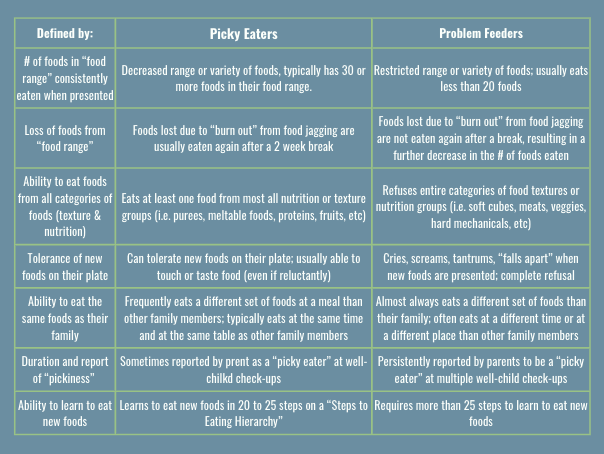
What are food jags?
Food jags occur from eating the same food for several meals day after day and then becoming burnt out on that food and dropping it from their feeding routine.
Okay, now what?
The biggest thing to remember when dealing with picky eaters is that picky eating is not your fault as a parent. Picky eating can be stressful for everyone, but it’s very important to remain calm and positive during meal times. Here are some tips to work on picky eating at home:
Start with no pressure meals where you let the child decide how much of a new food they want.
Move away from being a “short order cook” and making separate meals to accommodate your picky eater (it will reduce your stress as well!)
Always present meals with at least one safe food, but make sure you are also presenting foods the rest of the family is eating, even if it’s just a small amount.
Make meal times fun by using cookie cutters to cut foods into shapes, use fun utensils like toothpicks, to increase engagement and interactions with new foods.
Use positive and descriptive words when talking about foods - talk about the color, the texture, the shape, etc. of foods.
Reduce the use of words like “gross” and redirect your child when they use these types of words.
Exposure is the biggest key to picky eating so present foods over and over again to help your child become more familiar with new foods.
We know picky eating is a struggle and can feel so defeating, but you’ve got this!
We know picky eating is a struggle and can feel so defeating, but you’ve got this!


Comments